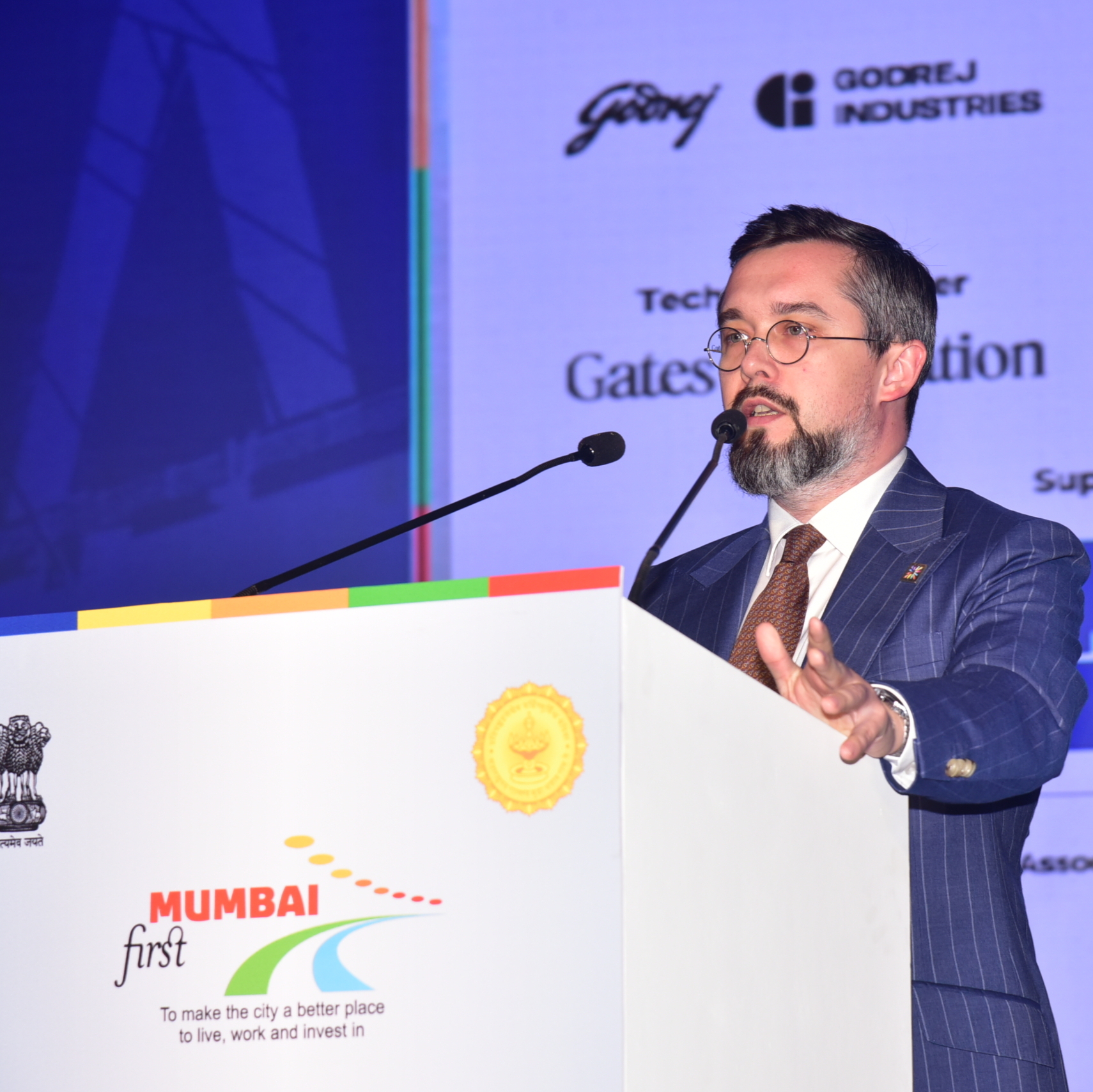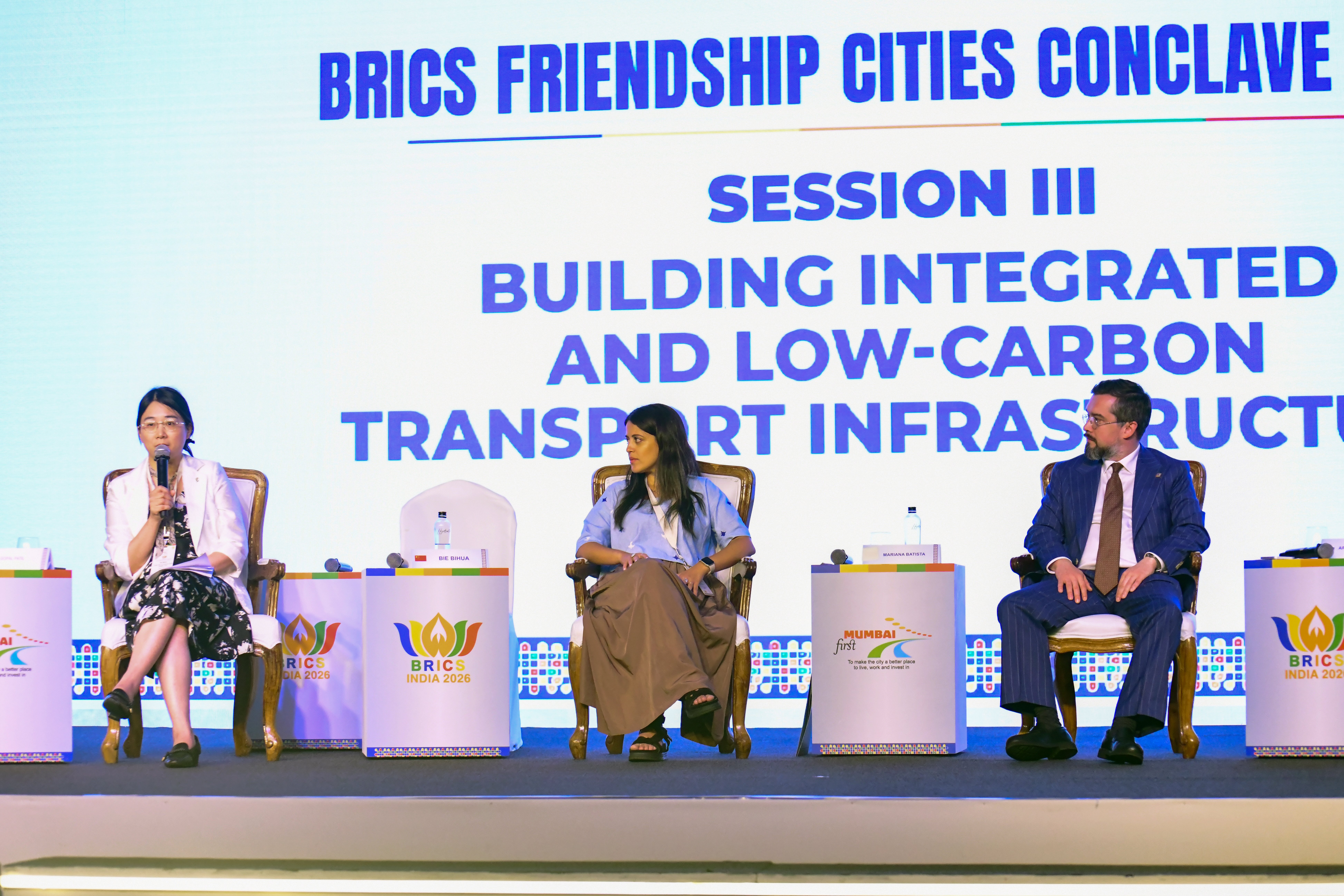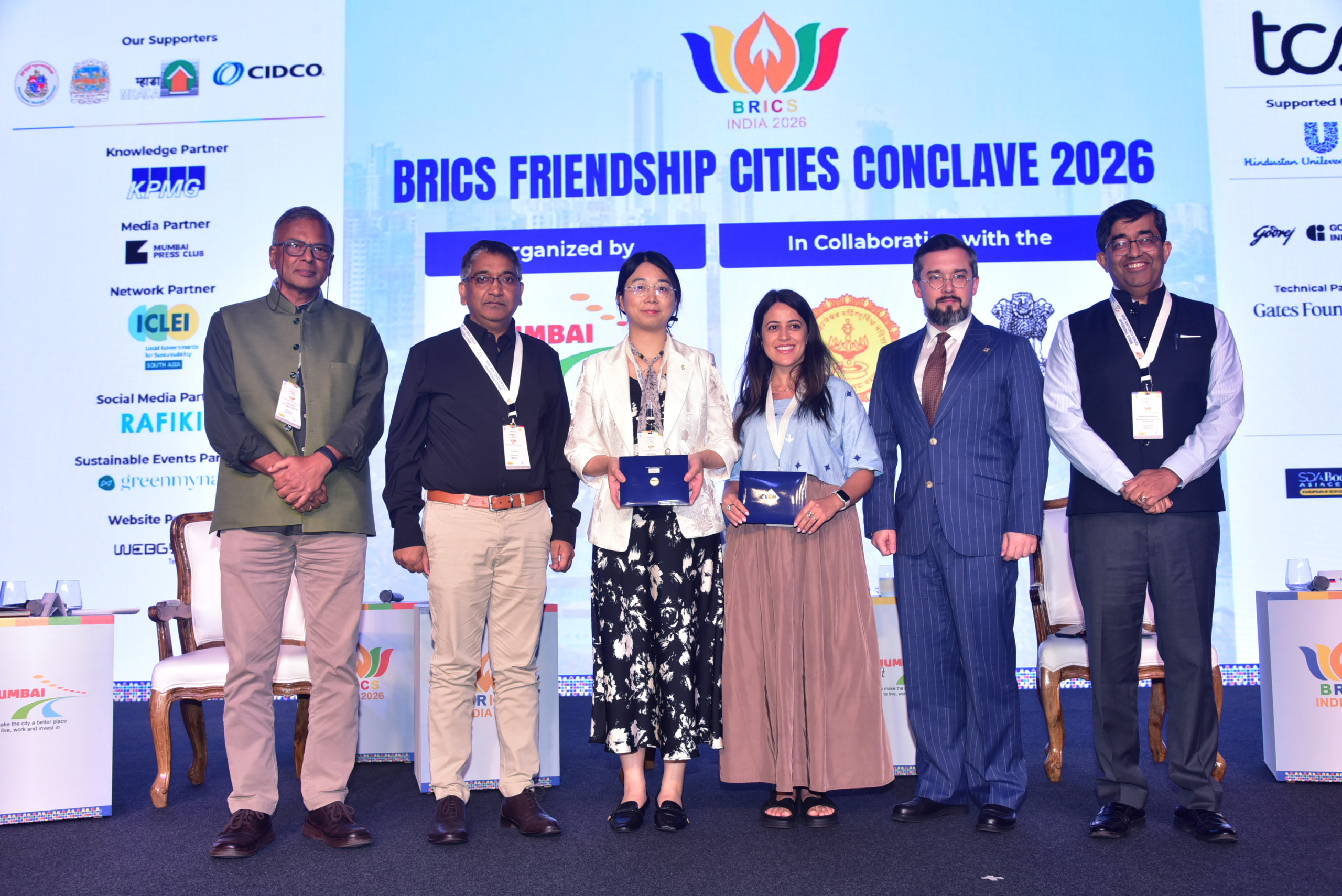
On the first day of the BRICS Friendship Cities Conclave, held in Mumbai, India, experts and representatives of local governments from BRICS countries and their partners exchanged experience in a session dedicated to building integrated and low-carbon transport infrastructure. During the discussion, Arseniy Karyakin, Secretary General of the BRICS+ Association of Cities and Municipalities and Head of the International Relations Department of the Kazan City Council presented Kazan’s experience in the field.
The event served as an important platform for exchanging best practices in sustainable development. The session, moderated by Shri Praveen Pardeshi, Chief Executive Officer of the Maharashtra Institution for Transformation (MITRA), focused on striking a balance between rapid urbanization and the need to reduce the carbon footprint, which currently accounts for approximately 23% of global carbon dioxide emissions.
Arseniy Karyakin began his speech with a brief overview of the activities of the BRICS+ Association of Cities and Municipalities. The Secretary General recalled that the initiative to establish the organization belonged to the Mayor of Kazan, Ilsur Metshin, and that the founding assembly took place in the capital of Tatarstan in June 2024 right before the BRICS Summit. Since then, the Association has carried out extensive work in organizing and holding the General Assembly in Maricá (Brazil), as well as working meetings in Dubai (UAE), Tehran (Iran), New Delhi (India), and Tangier (Morocco).
The main topic of the report was the implementation of Kazan’s Automated Traffic Management System (ASUDD).
Launched in time for the 2013 Universiade, the ASUDD now covers more than half of the city’s intersections and represents a highly sophisticated intelligent network. The system is based on 983 transport detectors and 356 video surveillance cameras that analyze traffic density in real time and adjust traffic light operations. «The green light stays on exactly as long as needed to clear the entire queue at the intersection. As soon as the road clears, the cycle shortens,» Karyakin explained, noting that the system also gives priority to public transport.
However, the main focus of the presentation was on the environmental benefits of the ASUDD. Arseniy Karyakin emphasized that by reducing idle time in traffic jams and optimizing traffic speeds, harmful emissions are cut by 20–25%. This represents Kazan’s direct contribution to the low-carbon agenda. An additional factor is the fleet renewal: today, 58% of the city’s buses run on environmentally friendly natural gas fuel.
Following the presentations, which also featured contributions from Ms. Bie Bihua, Vice President of the Shanghai Smart City Development Institute; Shri Sanjay Mukherjee, Metropolitan Commissioner of the Mumbai Metropolitan Region Development Authority; and Ms. Mariana Batista, Senior Manager for Public Transport at C40 Cities, the moderator posed questions to the panel.
In particular, the discussion addressed the dilemma of how digital integration can transform cities more effectively than building new infrastructure. In this context, the experience of Kazan and Moscow in creating integrated digital platforms generated considerable interest among international colleagues. Arseniy Karyakin emphasized that the success of Kazan’s digital transformation was made possible through the collaboration of all city services toward a common goal: improving the quality of life for citizens.
The Conclave will continue with sessions on combating air pollution, developing housing policy, and implementing artificial intelligence in urban governance. The BRICS Friendship Cities Conclave, organized with the support of the Government of Maharashtra and Mumbai First, will run until August 12.