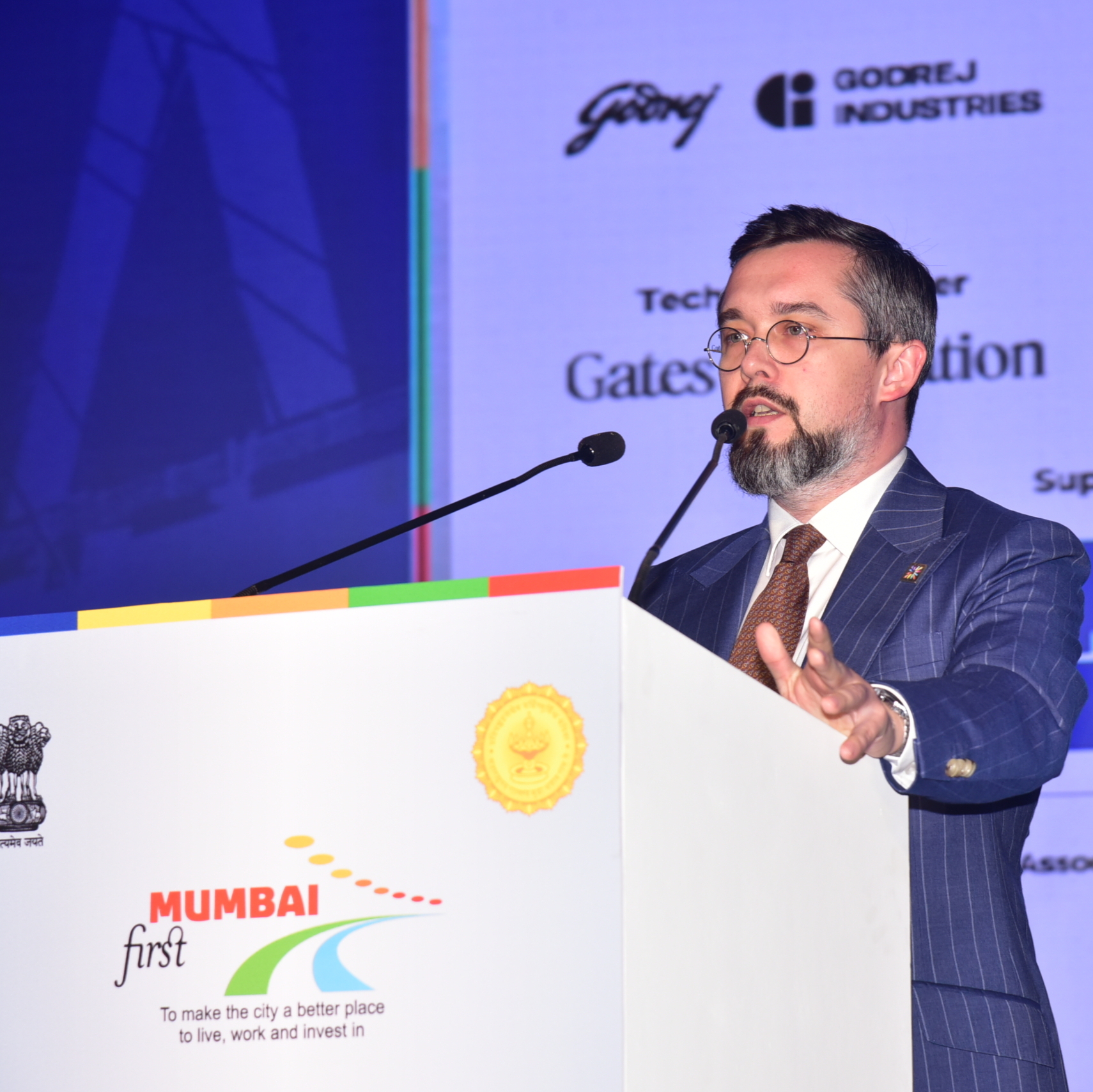
During the events in India, a meeting of the Committee on Digitalization of the BRICS+ Association of Cities and Municipalities was held. The “Dialogue on Digitalization” brought together representatives from Russia, India, South Africa, Ethiopia, and other countries to discuss the role of artificial intelligence, neural network technologies, and digital platforms in managing urban infrastructure and improving the quality of life of the population.
The session was moderated by Mr. Radmir Belyaev, Mayor of Nizhnekamsk (Russia). In his opening remarks, he noted that digital transformation is a systemic approach to city management that enhances safety, convenience, and efficiency of urban life. Mr. Belyaev emphasized that cities with a population of less than 300,000 people can be independent centers of competence in the field of digitalization.
Mr. Radmir Belyaev presented the experience of digital transformation of Nizhnekamsk — the third largest city in Tatarstan, which ranked sixth in Russia’s «IQ Cities» index in 2025. He spoke about the implementation of intelligent video surveillance and noted that the city operates a unified situation center integrating video surveillance, IP intercoms, analytics, and CRM systems. Special attention was paid to the creation of a digital twin of the city: more than 60% of water supply, sewage, and heating networks have been digitized, making it possible to visualize engineering systems and predict emergency situations.
Mr. Maxim Ryashin, Mayor of Khanty-Mansiysk, presented the experience of implementing artificial intelligence in urban infrastructure management. Khanty-Mansiysk, recognized as the most comfortable city in its size and climatic group and ranking first in the «IQ Cities» rating in the «Large Cities» category, is actively implementing a digital transformation policy. Mr. Ryashin spoke about the intelligent neural network complex for monitoring road infrastructure, which automatically records deviations from standards in the condition of roads, sidewalks, and lighting facilities. The system detects defects ranging from missing markings to snow drifts and icing, is integrated with the «Roads of Ugra» information system, and reduces response time. Mr. Ryashin also presented projects for modernizing outdoor lighting: more than 10,000 “smart” luminaires with automatic diagnostics have reduced energy consumption by 77%.
Ms. Lyudmila Neshchadim, Head of the Administration of the Gatchina Municipal District (Russia), presented the experience of using neural network technologies in municipal management. She spoke about the implementation of a neural network complex installed on city service vehicles, which automatically identifies road infrastructure defects: potholes, damaged signs, lighting poles, snow cover, icicles on buildings, illegal advertising on poles, and overflowing container sites.
From Ethiopia, Mr. Andualem Tenaw Habtie, Director General of the Ethiopian Cities Association, participated in the discussion. He spoke about his country’s experience in the field of urban digitalization and proposed nominating Mr. Radmir Belyaev, Mayor of Nizhnekamsk, for the position of Chairman of the Committee on Digitalization of the BRICS+ Association of Cities and Municipalities.
The experience of South Africa in the field of digitalization was shared by Mr. Xola Pakati, Deputy President of the South African Local Government Association.
A video address for participation in the dialogue was sent by Ms. Anna Gurarii, Chairman of the Yekaterinburg City Council. The video is available at this link.
Participants of the digitalization dialogue confirmed that the development of smart cities requires not only technological solutions but also a systemic approach, including public education, increasing digital literacy, fostering a positive attitude towards innovation, and continuous interdepartmental cooperation. The meeting identified promising areas of cooperation: exchange of practices in implementing artificial intelligence in city management, development of common standards for digital maturity of municipalities, and creation of a platform for data exchange between cities of BRICS+ countries.
The meeting of the Committee on Digitalization became an important step in forming a unified approach to the digital transformation of cities in BRICS+ countries, where technologies work for people, improving the quality of life and creating conditions for sustainable development.